
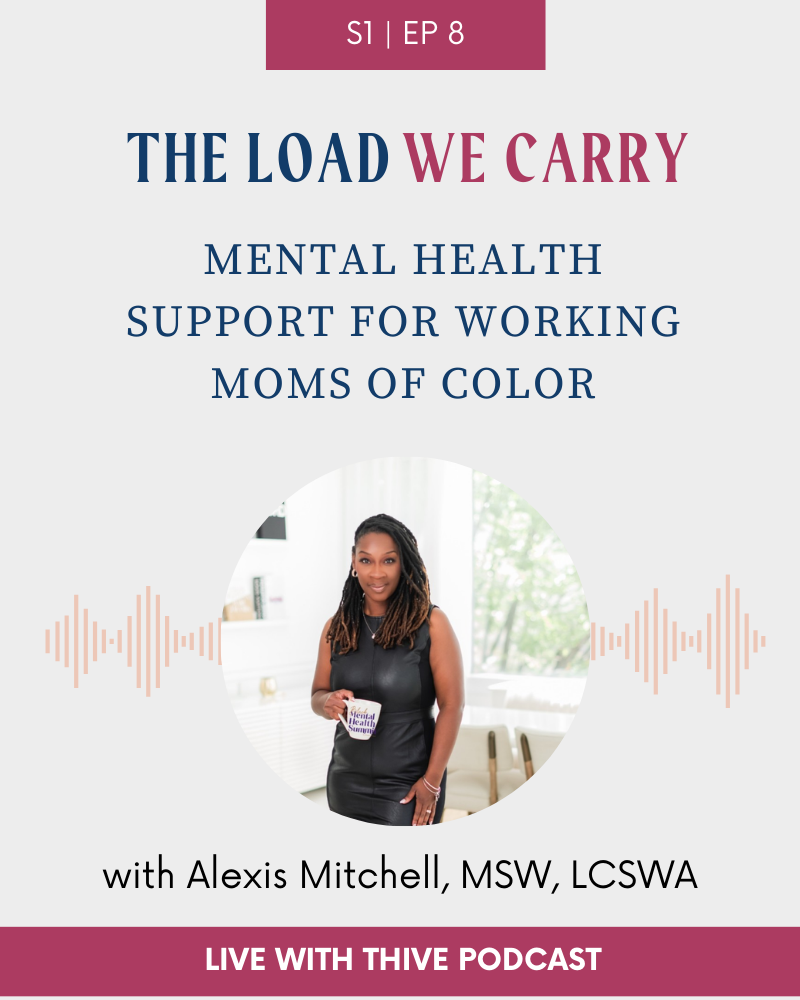
The Load We Carry: Mental Health Support for Working Moms of Color
Live with THRIVE Podcast | Episode Show Notes
Featuring Special Guest: Alexia Mitchell, Licensed Clinical Therapist Associate
Hey Sis,
Let me ask you something: When was the last time someone asked how you were doing? Not how the baby is sleeping. Not how work is going. But how you are feeling?
If you had to pause to remember, this episode is for you.
In this powerful conversation, I sat down with Alexia Mitchell, a licensed clinical therapist and longtime friend (we go all the way back to middle school!), to have an honest dialogue about something we don't talk about nearly enough: maternal mental health for Black and Brown mothers.
Why This Conversation Matters
According to recent studies, maternal mental health disorders affect approximately one in five women during pregnancy or within the first year of childbirth. But here's what the research also tells us: Black and Brown mothers are significantly more likely to experience these challenges compared to our white counterparts.
The reasons are multifaceted: systemic barriers to accessing mental health care, the intersection of racism and socioeconomic inequities, and the cultural stigma surrounding mental health in our communities.
Key Takeaways from This Episode
1. Two Things Can Be True
One of the most powerful moments in our conversation was when Alexia reminded us that motherhood can be both a blessing AND overwhelming. You can love your baby deeply and also feel completely depleted. You can be grateful for this new life and also mourn the parts of yourself that feel lost.
"Oh my God, this bundle of joy! He is so cute! Oh my God... but he is nipping on my nipples and they hurt. Two things can be true." — Alexia Mitchell
2. The Pink Flags To Watch For
Alexia shared some early warning signs that something might be off. These aren't necessarily "red flags" yet, but they deserve attention:
- Failing to bathe or care for yourself for extended periods
- Not getting out of bed
- Ignoring the baby's cries
- Excessive crying that feels uncontrollable
- Feeling detached or disconnected from your baby
- A noticeable change in how you normally show up for yoursel
3. Coping Strategies That Actually Work
These aren't just trendy wellness tips—these are evidence-based, therapist-approved strategies you can start using today:
Breathwork: "Smell the roses" (inhale) and "blow out the candles" (exhale). Count to four on each breath. Simple, but it works.
Movement: Even simple yoga poses like a rag doll (bending over and letting your arms sway) or downward dog can help reset your nervous system.
Connection: Call a trusted friend. And pro tip: Ask permission before you vent. "Hey, are you in a good space? I need to go IN for a minute."
Accessible resources: Don't underestimate the power of DoorDash, grocery delivery, or any other service that gives you back time and energy. (And yes, Alexia acknowledged this comes from a place of privilege—use what's available to you.)
4. The Cultural Expectation We Need to Release
Alexia named it clearly: We have been conditioned to take care of everyone else before we take care of ourselves.
You know the airplane analogy—put your oxygen mask on first—but how often do we actually practice that? The "strong Black woman" narrative might feel like armor, but it can also keep us from getting the help we need.
5. How to Actually Support a Mom in Your Life
If you know a woman who is pregnant or postpartum, here's what Alexia recommends:
- Check in regularly. A Facebook post doesn't mean she's okay. Call her.
- Do a drive-by. Sometimes just showing up means everything.
- Ask: "How can I support you?" She might not know—so offer specifics: "Can I bring dinner tonight?" or "Can I do a load of laundry while I'm here?"
- Do something while you visit. Holding the baby is nice, but washing dishes or folding clothes? That's real support.
Alexia's Final Wisdom
When I asked Alexia how women can thrive in womanhood, motherhood, and career, her answer was clear:
"Put yourself first—inside and out. Take care of your physical health, attend your appointments, get your mammograms. And know that it's okay not to be okay. Seek clinical support when you need it. You're only as strong as the next woman beside you, so we have to continue to uplift ourselves and each other." — Alexia Mitchell
About Our Guest
Alexia Mitchell is a Licensed Clinical Therapist Associate and the founder of Reset and Heal PLLC, a mental health consulting company. With a background in social work and over a decade of experience in child welfare and nonprofit mental health leadership, Alexia is passionate about creating safe spaces for Black and Brown women to be seen, heard, and supported.
Connect with Alexia: resetandhealinc.com | Facebook: Reset and Heal PLLC
Listen to the Full Episode
This conversation goes so much deeper than what we could capture here. From Alexia's personal story of having a premature baby to our trip down memory lane about Destiny's Child and velour tracksuits (yes, really!)—you don't want to miss this one.
LISTEN NOW ON YOUTUBE | LISTEN ON APPLE PODCASTS | LISTEN ON SPOTIFY
Ready to Stop Surviving and Start Thriving?
If this episode resonated with you, you're not alone. So many of the women I work with come to me feeling stretched thin, exhausted from holding everything together, and wondering if there's more to life than just getting through each day.
There is.
I offer coaching for high-achieving Black and Brown women who are ready to thrive in womanhood, motherhood, and career—without sacrificing who they are or who they're becoming.
Keep thriving, Sis.
Dr. Alison Harris Welcher
Founder, THRIVE Life Coaching